
OBBBA tax strategies for business owners are the focus of Laura Dohanes’ session, turning the new law into a practical roadmap for profitable entrepreneurs.
Laura opens the OBBBA expert series by reframing tax completely: tax is not just a bill – it’s one of your most powerful levers for building net worth. The problem is that most entrepreneurs are using a scattered set of tactics instead of a cohesive strategy built for their specific business, income level, and exit goals.
Under OBBBA, several major tax rules that affect business owners and investors have been clarified or extended. Rather than guessing what might happen, we now have a clearer framework and a defined window of time to act. Laura emphasizes that this is the moment to:
She cautions that “waiting to see what happens” is itself a decision – usually the most expensive one. Many of the best strategies are only available if you set them up before a big liquidity event, not after.
A central theme in Laura’s talk is getting money into the right buckets at the right time. She walks through examples of how owners can:
The focus is not on “cute tricks,” but on designing a consistent system that reduces tax drag year after year and frees up more cash for reinvestment.
Laura also addresses the growing importance of state-level planning. Under OBBBA, many owners now face a mix of federal rules, state pass-through entity tax (PTET) elections, and multi-state filing requirements. She explains that:
Rather than trying to memorize every state rule, Laura urges owners to treat state planning as an integrated part of their overall tax strategy and work with advisors who actually read each state’s instructions before making elections.
For official IRS discussion of pass-through entity filing issues, see the IRS FAQ on negative amounts for Schedules K-2/K-3.
A recurring question in her session is: “What’s the end game?” Are you planning to sell your company, hand it off to children, or keep it as a cash-flow asset alongside other investments? Under OBBBA, the answers to those questions determine:
Laura shares examples of owners who did extensive planning only after a buyer showed up – and ended up leaving a meaningful percentage of the sale on the table. The better sequence is to align tax, estate, and exit decisions now so that when an opportunity appears, the structure is already in your favor.
Finally, Laura returns to the theme that runs through the whole event: you can’t afford advisors who operate in silos. A new LLC, a buy-sell agreement, a large insurance policy, or a trust strategy all have tax consequences. The best outcomes happen when:
Under OBBBA, the rules are clear enough to act decisively – but only if everyone is aligned. Laura’s segment is your invitation to stop treating tax planning as a once-a-year compliance task and start using it as a core part of your wealth-building strategy.
Used correctly, these OBBBA tax strategies for business owners can meaningfully cut annual tax drag and free up cash for reinvestment.
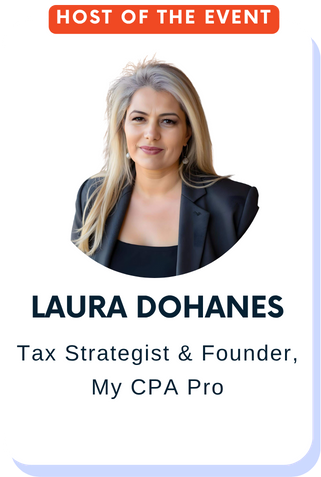
A nationally respected tax strategist with over two decades of experience helping business owners and high-net-worth individuals use the tax code to protect and multiply wealth. Laura is known for translating complex legislation into clear, actionable strategy — not theory.
Schedule a call to see how these strategies apply to your situation.
This summary is educational only and not individual tax, legal, or investment advice.

© 2026 My CPA Pro, P.C.
Laguna Beach, California · (949) 208-9087
Serving business owners throughout the United States